NASA Space Apps 2026 / Local Winner
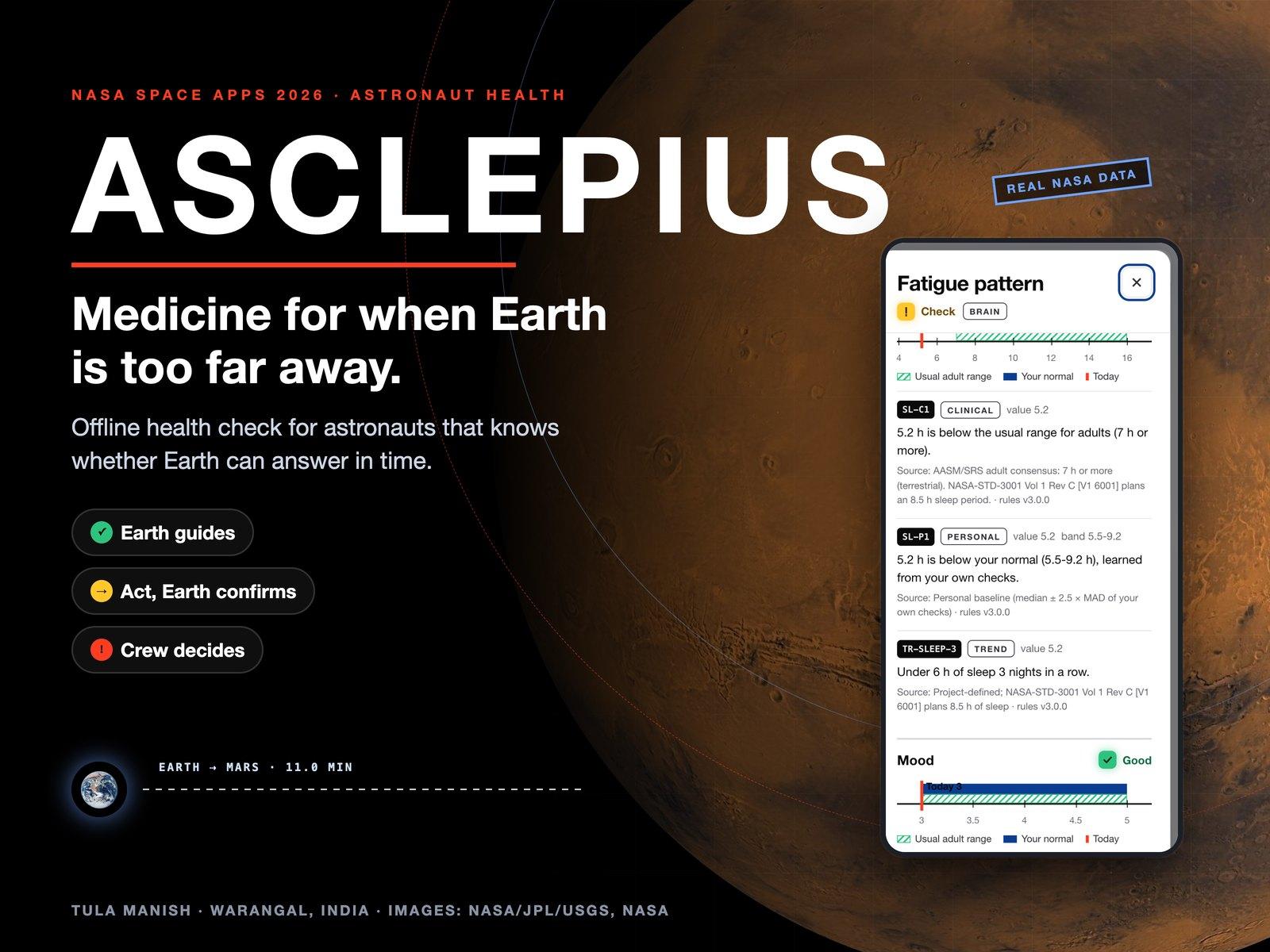
An offline health check for astronauts that knows whether Earth can answer in time.
Role
Solo developer
Result
Local Winner, Space Apps 2026
Tests
162 passing
Stack
React, TypeScript, Tauri
The Real Problem
On Mars, your doctor is on Earth. A radio message takes 4 to 22 minutes each way, and in 2028 the Sun sits between the planets and the link goes silent for 27 days.
Normal is also personal: a resting heart rate of 74 is fine for most adults but a warning sign for an astronaut whose own normal is 52 to 62.
Finding the Fix
Every morning the astronaut does a one-minute check of six readings: blood pressure, heart rate, blood sugar, temperature, sleep and mood. Each reading is judged against the usual adult range and against the astronaut's own learned normal, and the worse result wins. No AI makes health decisions; every colour shows the rule and the NASA source behind it.
Earth Reply Clock: light time to Earth, plus the flight surgeon's reply, plus light time back, compared with how soon the crew must act.
NASA data: distances from JPL Horizons, crew data from the Open Science Data Repository, and limits from NASA-STD-3001.
What Actually Happened
While working with Inspiration4 crew blood data (NASA OSDR study OSD-569), I found a row missing one value, which pushed everything after it one column to the right. The row's own maths proved it. I wrote a script that corrects a copy and leaves NASA's file untouched, and reported it to the OSDR team on 13 November 2026.
An earlier version of my project made a claim that came from that shifted row, so I withdrew it. ASCLEPIUS was named a Local Winner.
What I Learned
Check the data before trusting the finding, especially when the finding is the one you hoped for.